
Gelco Chimney Sweep in Anaheim Colony: A Homeowner’s Guide
If you’ve been told your chimney needs a Gelco liner or component, it’s worth understanding what you’re actually buying. Gelco is a specific manufacturer with specific installation standards, and not every sweep is equally familiar with their product line. That gap matters: the difference between a liner that lasts and one that fails early is usually the fit, the fastening, and whether the installer read past page one of the manual. This guide explains where Gelco products sit in a chimney system, how to judge a contractor’s familiarity, and what a real service visit should look like in Anaheim Colony. If you’d rather hand the whole thing to a specialist than climb a ladder yourself, call (833) 482-6032.
What does Gelco actually make, and where does it go in your chimney?
Gelco manufactures components for wood-burning and gas venting systems, with its best-known presence in flexible and rigid flue liner systems and the fittings that connect them. In a residential chimney, Gelco parts typically turn up in three places: the flue liner itself, the top plate and cap assembly where the liner terminates above the roof, and the appliance connector where the liner meets the firebox or stove.
Here’s the useful mental model. A chimney is a stack of parts that have to work as one assembly:
- The flue liner carries combustion gases up and out without letting them touch or seep through the masonry.
- The top termination (cap, top plate, spark screen) keeps rain and animals out and locks the liner in place.
- The appliance connection joins the firebox or wood stove to the liner without gaps.
When a liner is retrofitted into an older chimney in Anaheim Colony, the installer has to size the liner to the appliance and insulate it to keep flue gases hot enough to vent cleanly. That’s where product-specific knowledge pays off. A liner that’s cut short, connected loosely, or insulated with the wrong material can pass a visual glance and still vent poorly. None of those defects is visible from the living room. Chimney Sweep Anaheim Colony technicians have up to 10 years of experience working with professional-grade brands including Gelco, DuraFlex, HeatShield, Olympia Chimney, Famco, and Copperfield, so the components on your job are name-brand and compatible, not whatever was on the shelf.
Why does product-specific knowledge matter, and how do you test a contractor for it?
Product-specific knowledge matters because liner systems are engineered to be installed a certain way. Gelco, like any reputable manufacturer, specifies how its liner should be sized, insulated, supported, and terminated. An installer who works with the brand regularly knows those details without reaching for a spec sheet. One who doesn’t may treat a liner like generic flexible pipe, which is how you end up with a sloppy top plate connection or a liner that rattles against the flue tile.
Before you hire anyone in Anaheim Colony, ask a few direct questions and listen for specific answers:
- “Which Gelco products do you install regularly?” A knowledgeable tech names liner types and fittings. A vague answer is a warning sign.
- “How do you size the liner to my appliance?” The answer should mention the appliance’s venting requirements, not just the chimney’s dimensions.
- “What’s your top termination detail?” Look for a real top plate and cap assembly, properly sealed, not a loose mortar cap.
- “Can I see the inside before and after?” A camera inspection with photos is standard for a specialist. If it isn’t offered, keep asking.
This is also why we treat inspection as its own service. You get an honest assessment of your flue even if the answer is “nothing needs replacing this year.” That matters when the alternative is a sales pitch dressed up as a diagnostic. Our Chimney Sweep Anaheim Colony page lays out the full scope if you want to see it in one place.
How does a Gelco liner system compare to other liner options?
Most liner conversations in Anaheim Colony come down to three paths: a flexible stainless liner (Gelco and comparable systems), a cast-in-place or resurfacing approach like HeatShield, or a full rebuild of a damaged clay flue. Each fits a different condition, and the right choice depends on what the camera finds.
- Flexible stainless liner systems suit chimneys where the existing flue is intact enough to host a new liner and the appliance needs a properly sized, insulated vent. They’re the workhorse option for wood-burning and many gas applications.
- Cast-in-place resurfacing (HeatShield) works when the flue has cracks and spalling but the structure can be restored from the inside without pulling the whole lining. It’s often the repair that saves a homeowner from full replacement, which is why HeatShield-capable services are worth finding.
- Full flue rebuild is the heavy option, reserved for liners that are too far gone to restore or a chimney whose structure has failed.
On cost, prices vary by flue size, height, insulation, and termination hardware, so we don’t quote a figure without an inspection. What we can say is that resurfacing is generally the lower-cost path where it applies, liner installation sits in the middle, and rebuild is the most involved. The written estimate sets the price, and the camera evidence backs up why a given path is recommended. We compare apples to apples with brands like Gelco, Olympia Chimney, and Famco so you’re not choosing between a name product and an unbranded substitute that looks similar.
What should a service visit involving Gelco components actually look like?
A well-run visit involving Gelco components follows a predictable order, and you should be able to follow along at every step. Here’s what to expect from a chimney sweep in Anaheim Colony when a liner or component is in play:
- Inspection first. A camera goes up the flue and photos come back. You see the cracks, gaps, or creosote before anyone recommends a part.
- Agreed plan and price. The scope is written down, including which products will be used and why, before work starts.
- Sweep and prep. The flue gets cleaned so the new liner or component isn’t seated against soot and debris.
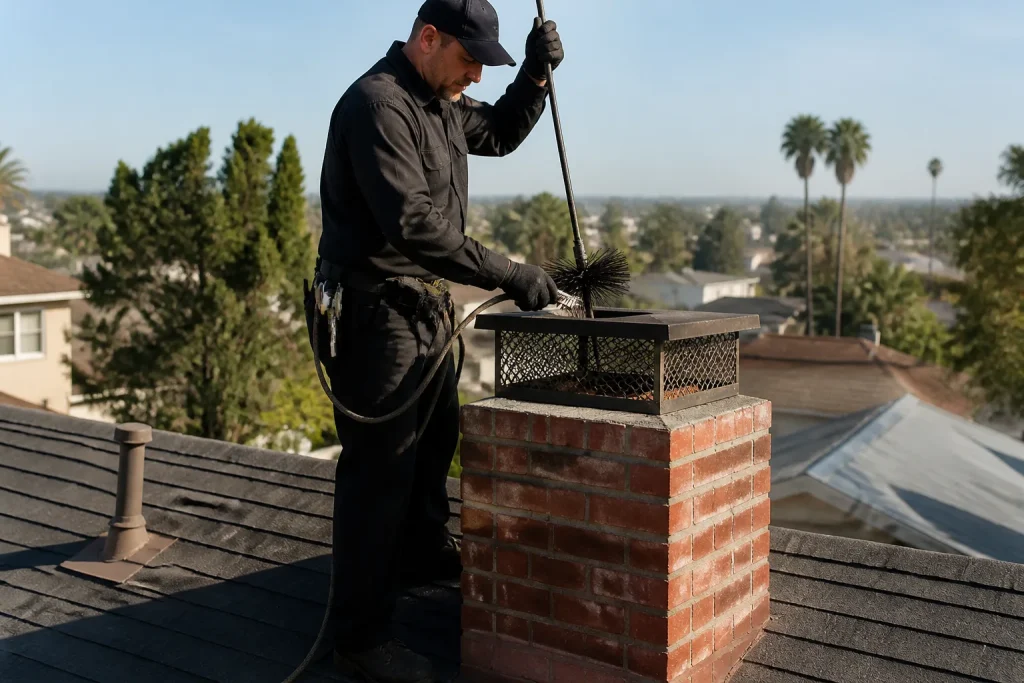
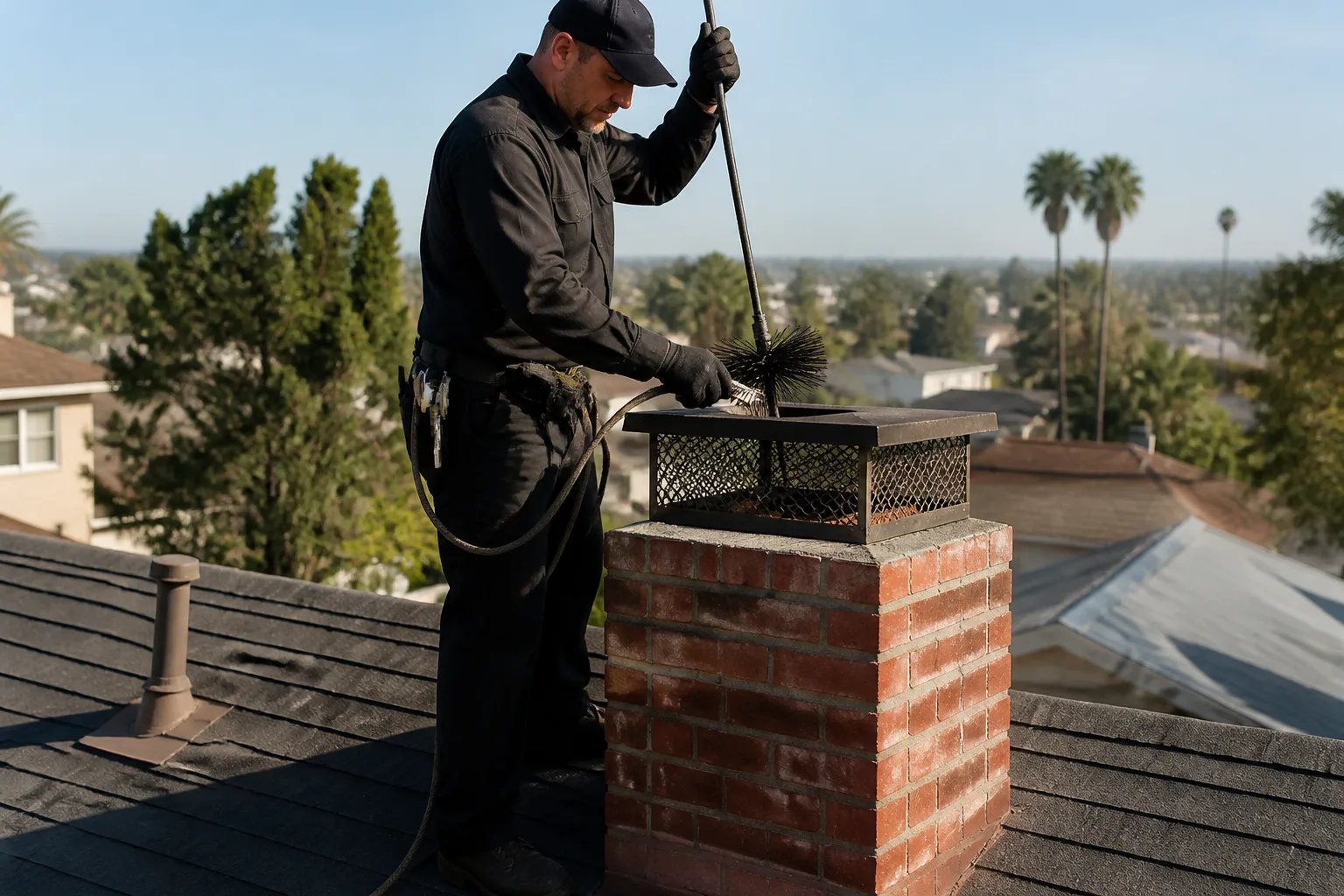
- Installation. Liner or component goes in, sized and fastened to the manufacturer’s spec, with the top termination sealed.
- Verification. Draft and fit are checked, and you get photos of the finished work.
Plain-language takeaways aside, the thing to insist on is the camera inspection and photo report. You shouldn’t have to take anyone’s word for a several-thousand-dollar recommendation. If a tech can’t show you the inside of your own chimney, that’s the moment to ask why. When the answer is “we don’t do that,” we’d suggest a second opinion.
How do you verify the work uses manufacturer-compatible materials?
Verification comes down to paperwork and a look at the parts. Ask for the product names in writing on the estimate, and where the job involves a Gelco component, ask to see the packaging or labeling before install. Reputable installers don’t mind this. Mixing brands mid-job is where compatibility problems creep in: a top plate from one line, a liner from another, and a connector that doesn’t quite seat.
It also helps to know what a proper install looks like at the finish. The cap and top termination should be sealed and straight, not leaning or caulked by the handful. The liner should be supported, not sagging. And any repair to the flue should come with before-and-after photos. Our chimney cap & crown work follows the same rule: the part is name-brand, the fit is checked, and you see the result. If a fireplace has been damaged by a prior liner problem, that’s usually a fireplace repair conversation before a liner goes back in.
When should you call a pro instead of waiting?
Some chimney issues are safe to schedule at your convenience; a few aren’t. Call a specialist if you notice any of the following in your Anaheim Colony home:
- Smoke rolling back into the room when you light a fire.
- A strong creosote or soot smell that lingers after the fire is out.
- Visible cracks in the flue or pieces of clay tile in the firebox.
- Water staining on the chimney breast or ceiling near the chimney.
- Any carbon monoxide alarm event close to a working chimney or gas appliance.
A draft or smell problem after a liner change points straight back to the install detail, which is exactly the sort of thing a Gelco-familiar technician is trained to trace. And if you’re about to sell or buy a home, an inspection report that follows NFPA 211 standards carries real weight with the other side of the table. If you need a chimney sweep to start with the basics, that’s the right first call. Before you light the first fire of the season, a quick sweep and camera check settles most of these questions in one visit.
Related services in Anaheim Colony
Gelco-related work usually sits inside a bigger conversation about your whole system. Alongside liner and component service, Chimney Sweep Anaheim Colony handles sweeping, inspection, cap and crown work, chimney repair, and fireplace repair. If you’re weighing a liner replacement against resurfacing, our inspection gives you the camera evidence to decide with, not guess at.
What happens when you call
- 1
A real person answersNo phone trees – you reach a local pro.
- 2
You get an upfront price rangeHonest numbers before anyone is dispatched.
- 3
A background-checked tech heads outLicensed & insured, dispatched right away.
- 4
You approve before work beginsNothing starts until you say go.
The Bottom Line
Gelco makes real components for real chimney systems, and the products only do their job when they’re sized, insulated, and installed by someone who knows the brand. Before you commit to liner work in Anaheim Colony, ask what product goes in, ask to see the camera evidence, and look for a specialist whose materials carry a recognizable name. Chimney Sweep Anaheim Colony works with Gelco and other professional-grade brands including DuraFlex, HeatShield, Olympia Chimney, Famco, and Copperfield, and treats inspection as its own service so you get an honest answer whether you need a repair or not. If you’re in Anaheim Colony and need help, Chimney Sweep Anaheim Colony offers free estimates. Call (833) 482-6032. We answer 24/7, with fast dispatch from 7am to 7pm, Sunday through Friday.
Frequently Asked Questions
A Gelco chimney liner is a liner component from Gelco, a manufacturer of wood-burning and gas venting products, used inside the flue so combustion gases vent cleanly. It has to be sized to your appliance and properly insulated to work as designed. Call (833) 482-6032 for an exact quote on liner work; estimates are free.
Any sweep can physically fit a liner, but product-specific knowledge matters for the fit, insulation, and termination detail. Ask what Gelco products the technician installs regularly and whether a camera inspection and photo report are included. If the answers are vague, get a second opinion. Call (833) 482-6032 to book an inspection.
Not always. Resurfacing is generally the lower-cost path where the flue can be restored from the inside, while a new liner sits in the middle and a full rebuild is the heaviest option. The right choice depends on what the camera shows, and the written estimate sets the final price. Call (833) 482-6032 for a free estimate.
Skipping liner repair leaves cracks and gaps where creosote can collect and where gases can escape into the structure, which raises chimney fire and carbon monoxide risk. A camera inspection tells you whether it can safely wait or not. Call (833) 482-6032 to get an honest look at your flue.
Written by the team at Chimney Sweep Anaheim Colony.
Need Chimney Cleaning Help?
Call Chimney Sweep Anaheim Colony - the local pro we connect you with is licensed and insured, with free written estimates in Anaheim Colony.
(833) 482-6032